
Share article
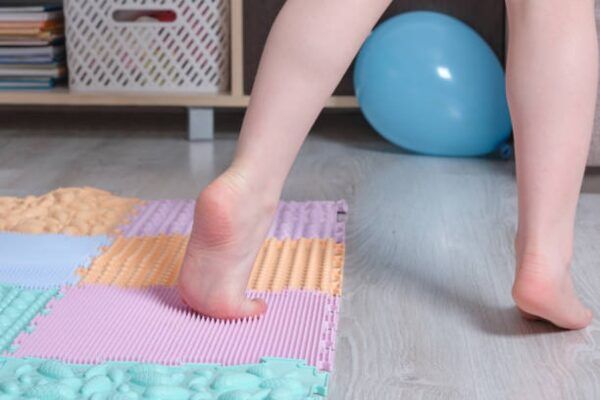
Toe walking is an atypical gait in which the child does not place their heels on the ground and primarily bears weight on the forefoot.
In children aged 2 years and under, this walking pattern may be observed occasionally and is generally considered normal within the context of learning to walk. However, it is expected that a child will regularly place their heels on the ground before the age of 5.
In the absence of a diagnosed neurological disorder, toe walking is not considered a simple “bad habit.” It is generally attributed to:
- Neurodevelopmental origins in about 90% of cases
- Musculoskeletal origins in about 10% of cases
Are there predisposing factors?
In most cases, toe walking is considered idiopathic, meaning no specific cause is identified, although it may be related to various developmental or functional factors. More rarely, it may be associated with neurological, sensory, or neuromuscular disorders. A professional evaluation can determine whether the gait is benign or requires specific intervention.
Commonly observed characteristics
Certain characteristics are more frequently seen in children who walk on their toes (without being direct causes):
- Family history of toe walking
- Male sex
- Prematurity or low birth weight
- Slight variations in muscle tone (increased or decreased)
- Delayed language development
- Sensory modulation difficulties (tactile, vestibular, or proprioceptive)
- Delay in global or fine motor development
- Neuropsychological difficulties (memory, learning, behavior)
And primitive reflexes?
Toe walking may also be associated with delayed integration of primitive reflexes. Primitive reflexes are automatic movements present in infants that should naturally integrate during development. If they remain active, they can interfere with nervous system function and influence motor, cognitive, and emotional development. For more information, see the article: Les réflexes primitifs du nourrisson.
What are the possible consequences?
According to several studies, about 80% of children experience a favorable natural progression before the age of 10. Prognosis is generally better when ankle mobility is preserved.
However, persistent toe walking can lead to certain consequences:
Musculoskeletal consequences:
- Shortening of the Achilles tendons
- Decreased ankle mobility
- Possible forefoot deformities
- Tibial torsion
Postural compensations:
- Increased lumbar curvature
- Knee hyperextension
Functional impacts:
- Decreased balance and increased risk of sprains
- Leg or foot pain
- Muscle imbalances
- Difficulty running, jumping, descending stairs, or squatting
- Low walking endurance
- Increased risk of falls
The longer toe walking persists with age, the greater its potential impact on a child’s quality of life.

Physiotherapy approach and treatments
At Kinatex Sports Physio, evaluation identifies possible causes and establishes an individualized treatment plan. Optimal treatment usually relies on a conservative approach, with medical interventions as needed. Conservative treatments include pediatric physiotherapy, tibial braces (day or night), serial casting, and specialized orthoses such as the Turtle Brace.
Role of physiotherapy
Physiotherapy aims to prevent or reduce compensations, preserve ankle mobility, improve alignment, and promote optimal motor development. The treatment plan may include:
- Postural guidance
- Teaching an appropriate gait pattern (“heel strike”)
- Stretching exercises
- Core and lower limb strengthening
- Balance exercises
- Sensory stimulation (walking barefoot, varied surfaces, different textures)
- Primitive reflex integration work

Braces and serial casting
When mobility loss is more significant, braces or serial casts may be recommended to improve lower limb alignment, increase ankle flexibility, gradually lengthen the Achilles tendon, and promote a more functional gait pattern. Wearing time usually ranges from 1 to 6 weeks, depending on severity and medical recommendations.
Medical (non-conservative) treatments
In more severe cases, other options may be considered, such as botulinum toxin (Botox) injections to temporarily reduce muscle tension or Achilles tendon lengthening surgery. Surgery can improve the condition in the medium term (up to 5 years) but carries risks, including persistent muscle weakness and the possibility of recurrence, and is therefore reserved for the most severe cases.
Conclusion
Toe walking is common in the early stages of learning to walk and can be normal in young children. However, if it persists beyond the first few years or becomes constant, evaluation is recommended. Early intervention can:
- Prevent complications
- Optimize motor development
- Improve the child’s comfort and quality of life
If you have concerns about your child’s gait, Kinatex professionals can provide personalized support tailored to their needs.
Share article