Baby’s motor development and gross motor skills from birth to 12 months.
•
General
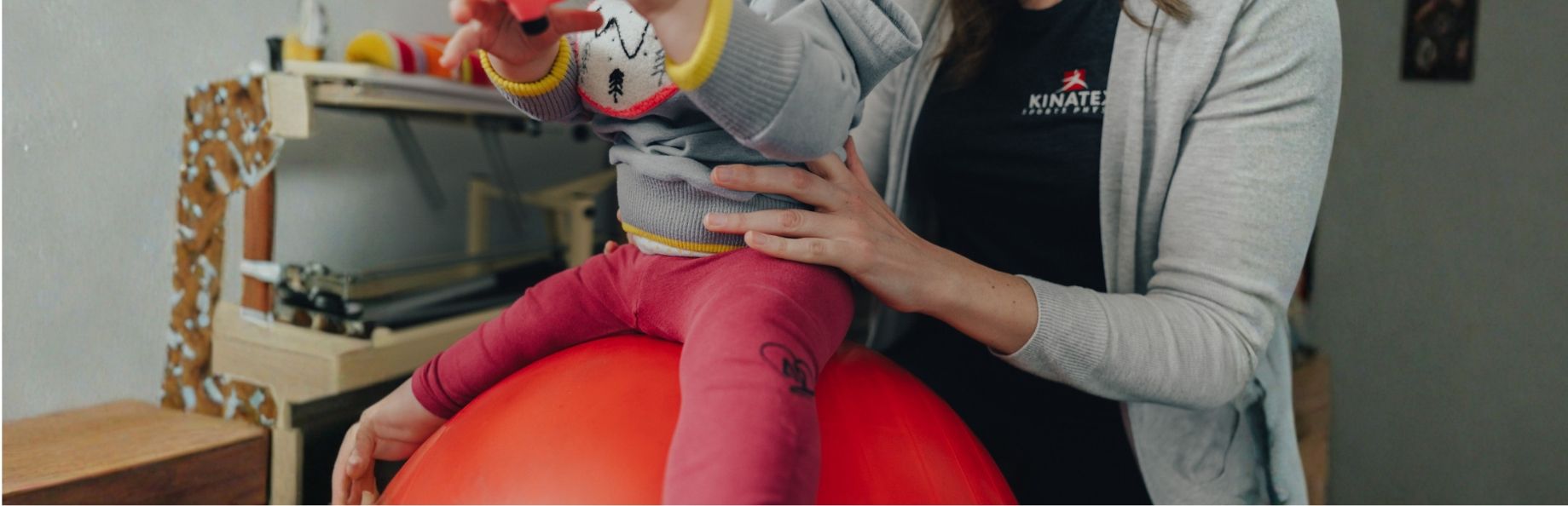
Gross motor skills are all the important movements your baby learns to make during their development. Motor development is the overall, continuous process through which a child gains control of their body, including gross motor skills. These abilities develop through the gradual and harmonious strengthening of their strength, coordination, balance, postural reactions, and the progressive integration of primitive reflexes.
These movements include rolling, moving on the floor, sitting, standing, crawling, moving on all fours, walking, climbing, running, hopping… All of these movements should be performed with coordination and harmony. The development of gross motor skills greatly supports the development of fine motor skills.
It’s important to remember that children develop at their own pace. The exact age at which motor skills are acquired is not the most important thing. What matters is that each baby follows the sequence of development. Indeed, each skill provides the proper foundation for the next stage. For example, your baby will not be able to move on their stomach before having sufficient head control. When a baby reaches each stage at their own pace, it promotes harmonious and natural development.
Nevertheless, parents and caregivers can help promote this development by stimulating the child in their daily life. There are also important actions to take, such as placing the baby on their tummy from the first weeks of life to encourage head lifting. This skill is essential because it will have a major impact on the rest of their development and also reduce the risk of positional plagiocephaly, or flat head syndrome. To learn more about this condition, you can read this article.
Here, we provide examples of small actions that are beneficial for your baby’s gross motor development. The information provided is intended to be general. If your child’s development concerns you, we recommend consulting a doctor or pediatric physiotherapist.
During the first weeks of life, your baby begins to move but has little voluntary control over their movements. However, they have more abilities than you might think! Over time, your baby will move more and discover new ways to explore their body and environment, with your help and through small activities you do together.
From birth to 10 days, your baby primarily adopts the physiological flexion position (fetal position). They cannot keep their head centered when on their back. On their stomach, they can lift their head and turn it from side to side.

During the first month, it is important to notice if your baby prefers to keep their head in one position (for example, always turned or tilted to the right) or has a flat spot on one side of the skull. If so, you can learn more about corrective actions by reading this article.
In the following weeks, your baby will move more, but still in a very disorganized way, and most movements are involuntary and asymmetrical. Even if movements are asymmetrical, your baby should not show a preference for the right or left side.
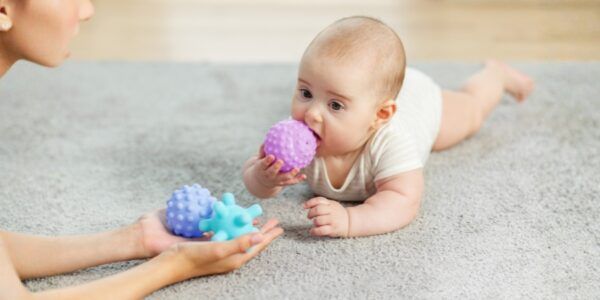
Around 2 months, your baby should be able to lift their head about 45 degrees while on their stomach, though without full control of the midline. To help them reach this milestone, place your baby on their tummy during awake periods and when you are present, even if head control is not perfect. At first, this will only be for a few minutes several times a day, but endurance will gradually increase.
The Canadian Paediatric Society recommends placing the baby on their tummy several times a day, for at least three 10–15 minute sessions daily.
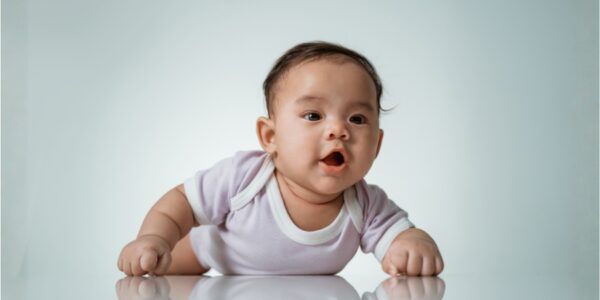
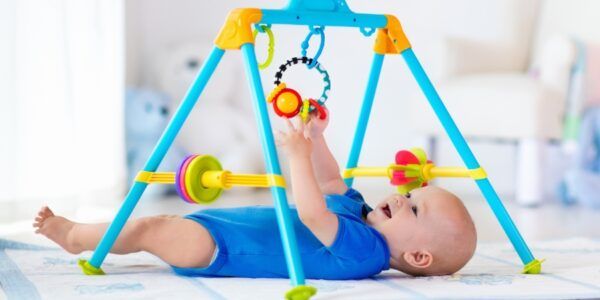
Your baby is more alert and curious. They begin to have better muscle control and therefore demonstrate more directed and voluntary movements. With good head control, they can play longer on the tummy and will start rolling from back to stomach and stomach to back. They become interested in exploring their environment and will begin moving on the floor on their stomach. This is also the beginning of learning to sit and get into the crawling position on all fours.
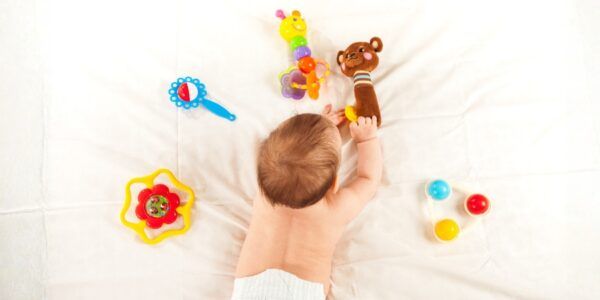
Your baby enters active exploration mode! This is when the home should be babyproofed. They no longer enjoy lying on their back to play. They become increasingly independent in changing positions: lying, sitting, all-fours, kneeling. They move on the floor by crawling and acquire all-fours movement. They develop balance and protective reactions in different positions: hands go forward, to the side, or back to prevent falling. For more on crawling, read this article.
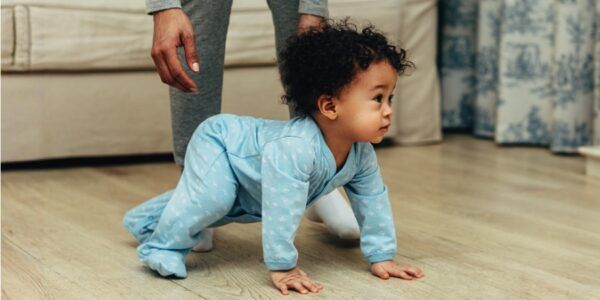
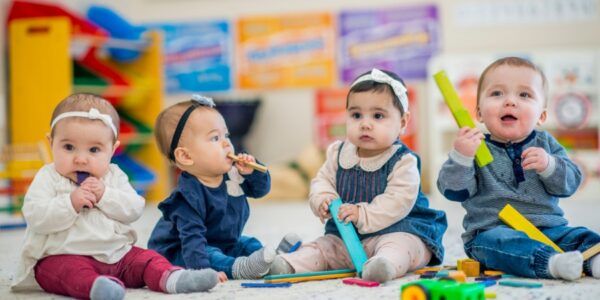
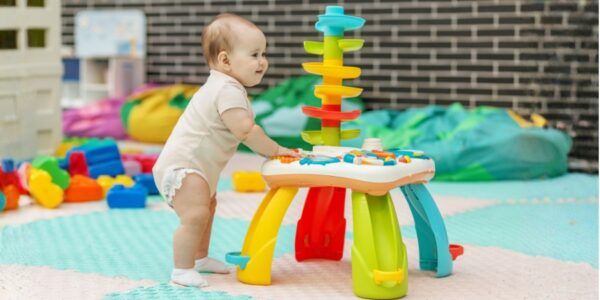
Your baby now moves more easily and explores on all fours or crawling. Movements and positions become more varied, with better balance and coordination. This is when walking begins!
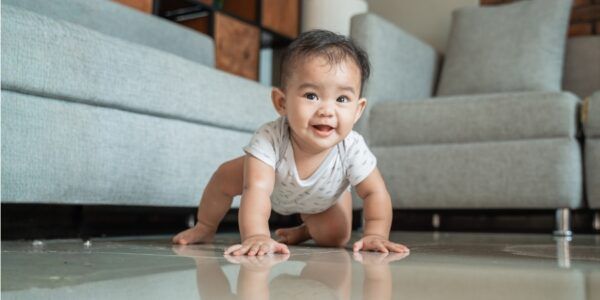
As noted earlier, it’s not the age at which your child performs a movement that matters. What’s important is the learning sequence and that movements appear harmoniously, fluidly, and symmetrically. If you notice asymmetry in movement or posture, consult your doctor or a pediatric physiotherapist. You can also consult us preventively for questions or guidance on supporting development.
Consult a pediatric physiotherapist if your baby:
These signs do not necessarily indicate a problem, but a pediatric physiotherapy evaluation can provide reassurance and, if needed, strategies to support your baby’s development.