
Share article
Have you noticed that the back of your baby’s head seems flatter on one side? Plagiocephaly, also known as flat head syndrome, is a common condition in infants. Although it is generally harmless to the child’s health, early intervention can often lead to better outcomes and help minimize its impact on motor development.
Learn how to recognize plagiocephaly, understand its causes, and know when to consult a healthcare professional.
What Is Plagiocephaly?
Plagiocephaly is a positional skull deformity that causes flattening at the back of the head, usually on the right or left side.
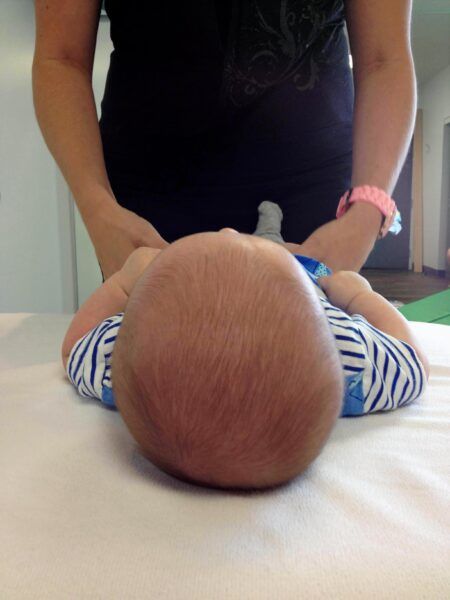
During the first few months of life, a baby’s skull bones have not yet fully fused. This flexibility is essential to allow the brain to grow rapidly, but it also makes the skull more susceptible to deformities caused by prolonged pressure. When the head consistently rests on the same area, the skull can gradually become flattened in that location.
Why Does a Baby’s Head Become Flat?
Repeated Pressure on the Same Area of the Skull
The main cause of plagiocephaly is constant pressure on the same part of the head.
This pressure can come from:
- the crib mattress
- a car seat
- a stroller
- a vibrating seat
- the parent’s arms during feeding
- any other surface where the baby spends a significant amount of time
When the head is consistently resting on the same side, this pressure can gradually alter the shape of the skull.
Position in the Womb
Some skull deformities can also begin developing before birth. During the final weeks of pregnancy, space becomes more limited, and the baby’s position can influence the shape of the skull.
The Link Between Plagiocephaly and Torticollis
In many cases, plagiocephaly is associated with congenital torticollis. Torticollis often causes a postural preference in the head, meaning that the baby tends to keep their head tilted and always look toward the side opposite to the tilt.

This repeated posture results in prolonged pressure on one area of the skull and can contribute to flattening. To learn more about this associated condition, read our complete article: Congenital Torticollis in Babies: How to Recognize It and When to Seek Care?
How Can You Recognize Plagiocephaly?
The first signs can sometimes be subtle, especially if your baby has a lot of hair! Carefully observing your baby’s head can often help detect changes early.
The most common signs include:
- flattening at the back of the head, more pronounced on one side
- loss of the natural curve of the skull on one side
- a head that appears asymmetrical when viewed from above
- one ear positioned farther forward than the other
- a more prominent forehead on the same side as the flattening
- facial asymmetry, such as one eye appearing more open or one cheek appearing fuller (generally in more pronounced cases).
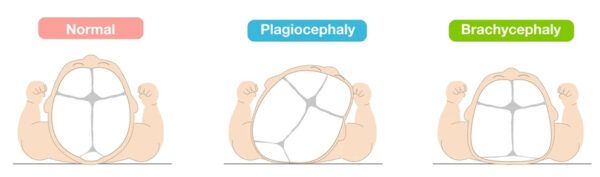
There are also different types of skull flattening or asymmetry besides plagiocephaly. The most common is brachycephaly, which is symmetrical flattening at the back of the head. In this case, there is a reduction in the natural curve of the skull at the back, a wider head, and often a rounder face. Like plagiocephaly, brachycephaly is caused by constant pressure on the same area of the skull—in this case, the back of the head.
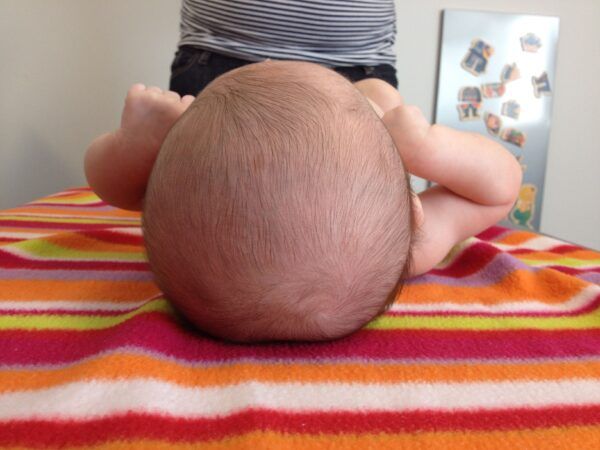
How Can You Observe the Shape of Your Baby’s Head?
One of the best ways to assess skull symmetry is to look at your baby’s head from above.
This perspective often makes it easier to see:
- Flattening and asymmetry of the skull
- The position of the ears
- The alignment of the forehead
Can Plagiocephaly Affect Motor Development?
The skull deformity itself does not directly affect motor development. However, when it is associated with torticollis or a movement preference, certain asymmetries may develop.
For example, your baby may:
- Turn their head more easily to one side
- Use one arm more than the other
- Prefer certain movements or positions
- Develop asymmetrical movement patterns, such as always rolling over to the same side
These compensations can then influence certain developmental milestones if they are not corrected. To learn more about the stages of your baby’s motor development, we recommend reading this article: Le développement moteur et la motricité globale de bébé, de la naissance à 12 mois.
When Should You See a Pediatric Physiotherapist?
It is recommended to consult a professional as soon as you notice:
- even mild flattening of the head
- a preference for positioning the head or looking in one direction
- facial asymmetry
- difficulty turning the head to one side
- asymmetrical movement
Even when the signs are mild, it is worthwhile to seek pediatric physiotherapy promptly, as the deformity can also progress quickly over a few weeks. The first few months of a baby’s life are an ideal time to intervene, and early treatment can often lead to faster improvement and help prevent the potential need for a cranial orthosis (helmet).
Between 0 and 6 Months:
- The skull is particularly malleable, as the skull bones have not yet fully fused.
- Improvements are generally achieved more quickly.
- The risk of worsening decreases.
- Position changes are more effective.
What Does Physiotherapy Treatment Involve?
Pediatric physiotherapy aims to reduce the factors contributing to the deformity and promote symmetrical motor development.
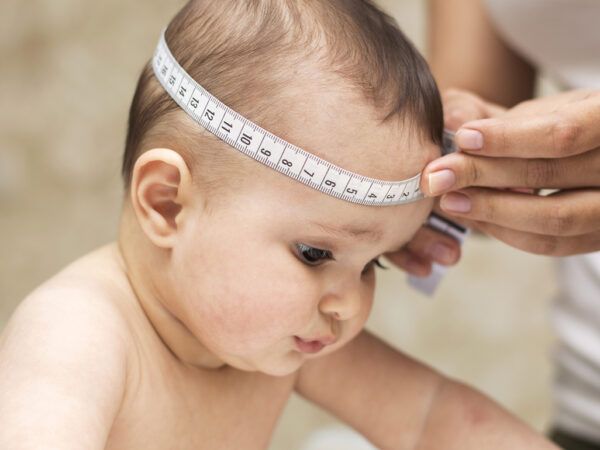
Depending on the child’s needs, treatment may include:
Positioning advice: Your physiotherapist will teach you different strategies for varying your baby’s positions throughout the day. This is the most important element in preventing and treating skull deformities!
Specific exercises: When plagiocephaly is associated with torticollis, specific exercises may be recommended to improve neck mobility. The exercises taught are easy to incorporate into your daily routine or playtime.
Motor development stimulation: Age-appropriate activities help promote balanced development and prevent compensatory movement patterns from developing.
Will My Baby Need a Helmet?
A cranial orthosis, often called a helmet, is not necessary in most cases. For many babies, repositioning and physiotherapy are enough to achieve significant improvement.
However, when the deformity is severe or continues to progress despite intervention, a cranial orthosis may be recommended. The decision is generally made around 6 months of age, depending on the severity of the deformity, its progression, and the child’s response to conservative treatment.
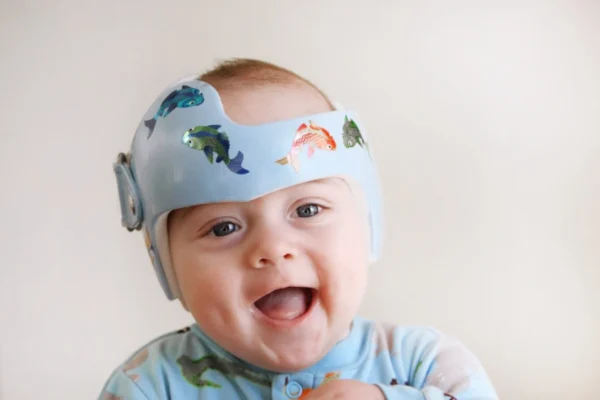
Even when a helmet is prescribed, physiotherapy remains important to address underlying causes, such as associated torticollis, and to promote symmetrical motor development appropriate for the child’s age.
How Can You Prevent Flat Head Syndrome?
Parents play an essential role in preventing and identifying plagiocephaly.
A few simple habits can help reduce the risk:
Encourage Tummy Time When Your Baby Is Awake and Supervised.
From the first few weeks of life, it is recommended to offer your baby short periods of tummy time while they are awake and always supervised. This position helps reduce the amount of time spent putting pressure on the back of the head while promoting the development of neck, shoulder, and trunk strength.
At first, a few minutes at a time may be enough. The Canadian Paediatric Society recommends placing babies on their stomachs for at least three periods of 10 to 15 minutes per day, gradually increasing the duration according to the baby’s tolerance.
If this position is difficult, you can place a small rolled-up towel or nursing pillow under your baby’s torso to make them more comfortable.

Vary Your Baby’s Positions.
Varying your baby’s positions throughout the day helps distribute pressure points on their head and encourages movement on both sides.
Some simple examples include:
- Alternate sides during feeding and diaper changes;
- Change your baby’s orientation on the play mat or in the crib so they naturally turn their head toward different stimuli, such as your voice;
- Encourage your baby to look both to the right and left;
- Vary play positions on their tummy and side when they are awake and supervised;
- Limit long periods spent in the same position.

For sleep, it is important to always place your baby on their back, in accordance with safe sleep recommendations. You can, however, vary their orientation in the crib so they do not always turn their head toward the same side to look at the light, door, or surrounding sounds.
Encourage Babywearing.
Babywearing is a great way to vary your baby’s positions throughout the day. It helps reduce the amount of time spent with the back of the head resting against a surface while also promoting closeness between parent and baby.
When babywearing is properly adjusted and appropriate for your baby’s age, it can also help support postural tone and awareness of their environment. To learn more, we recommend this article: Le portage physiologique : conseils pour porter bébé en toute sécurité et avec confort
Limit Time Spent in Equipment Where the Head Rests Against a Rigid Surface.
During periods when your baby is awake, it is best to limit the amount of time spent in equipment where the head rests against a rigid surface, such as a car seat, vibrating seat, stroller, or swing.
These devices are useful in certain situations, but they should not replace time on the floor, babywearing, or supervised playtime in different positions.
In Summary
Regular observation can help detect changes early. If you notice flattening, a preference for turning the head in one direction, or facial asymmetry, it is best to consult a professional promptly. The earlier intervention begins, the more effective positioning strategies and exercises generally are.
Our physiotherapists can also assess your child’s mobility, posture, and motor development to provide recommendations tailored to their individual needs. Don’t hesitate to make an appointment if you have any questions or concerns!
www.kinatex.com/en/our-services/pediatric/
Sources
Public Health Agency of Canada. (May 21, 2026). Government of Canada. Safe Sleep for Your Baby. https://www.canada.ca/fr/sante-publique/services/publications/vie-saine/sommeil-securitaire-votre-bebe-brochure.html
Jung, B. K., & Yun, I. S. (2020). Diagnosis and treatment of positional plagiocephaly. Archives of Craniofacial Surgery, 21(2), 80–86. https://doi.org/10.7181/acfs.2020.00059
Naître et grandir. (October 2024). La prévention de la tête plate. https://naitreetgrandir.com/fr/etape/0_12_mois/soins/bg-naitre-grandir-bebe-tete-plate/
Rogers, G. (2011). Deformational Plagiocephaly, Brachycephaly, and Scaphocephaly. Part II: Prevention and Treatment. Journal of Craniofacial Surgery, 22(1), 17–23. https://doi.org/10.1097/SCS.0b013e3181f6c342
Share article