Share article
Proprioception is the perception of our body’s position in space. It’s what allows us to watch the road while simultaneously using the steering wheel and pedals, to type on a computer without always looking at our hands, or to put one foot in front of the other to go to the bathroom at night. The sensory receptors responsible for proprioception are located in our muscles, tendons, ligaments, joints, and skin, and they give us something like a “sixth sense.”
What influences proprioception?
- An injury or surgery can negatively affect the proprioceptive receptors located in the injured tissues. This is one of the reasons why our balance is poor after an ankle sprain, especially when our eyes are closed.
- Proprioception can be more or less developed depending on a person’s age (it naturally decreases with aging) and certain medical conditions.
- It is also less effective in people with a lifestyle that uses little proprioception, for example, a less active lifestyle. It’s like training: if a skill is rarely used, our body will put little effort into maintaining it, and it will eventually deteriorate.
How is proprioception useful for injury prevention?
Good proprioception allows us to adjust our body position to avoid painful or extreme movements, for example when running on uneven ground or when serving in tennis. Proprioceptive receptors also allow us to react to protect ourselves, for example by correcting foot position when the ankle starts to roll during a bad turn while running.
Proprioception training is useful not only for preventing injuries in athletes, but also for preventing fall-related injuries in people with reduced balance. Proprioception is a skill that can be trained, regardless of age.
In addition to proprioception, two other systems work closely together to help us maintain balance: the visual system and the vestibular system. To learn more, refer to our articles on vertigo and the vestibular system.
What about returning to sport?
If you read the sections above, you can probably understand why proprioception is essential for returning to sport. After an injury or surgery, it is essential to retrain proprioception in order to avoid a premature second visit to the physiotherapist.
To train proprioception, there are a few basic principles to follow: the exercise should target the affected joint, be difficult to perform (without being impossible), and in the more advanced stages of rehabilitation, should resemble the sport-specific movements that the affected joint will need to perform. Finding the right exercise sometimes requires a bit of creativity!
Examples of proprioception exercises
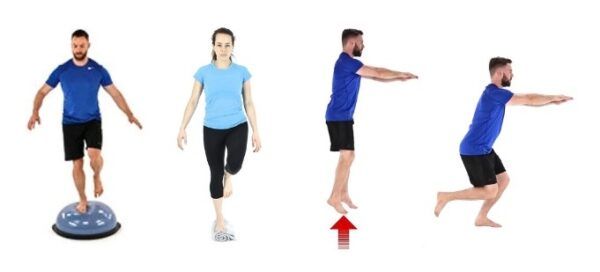
For the ankle or knee:
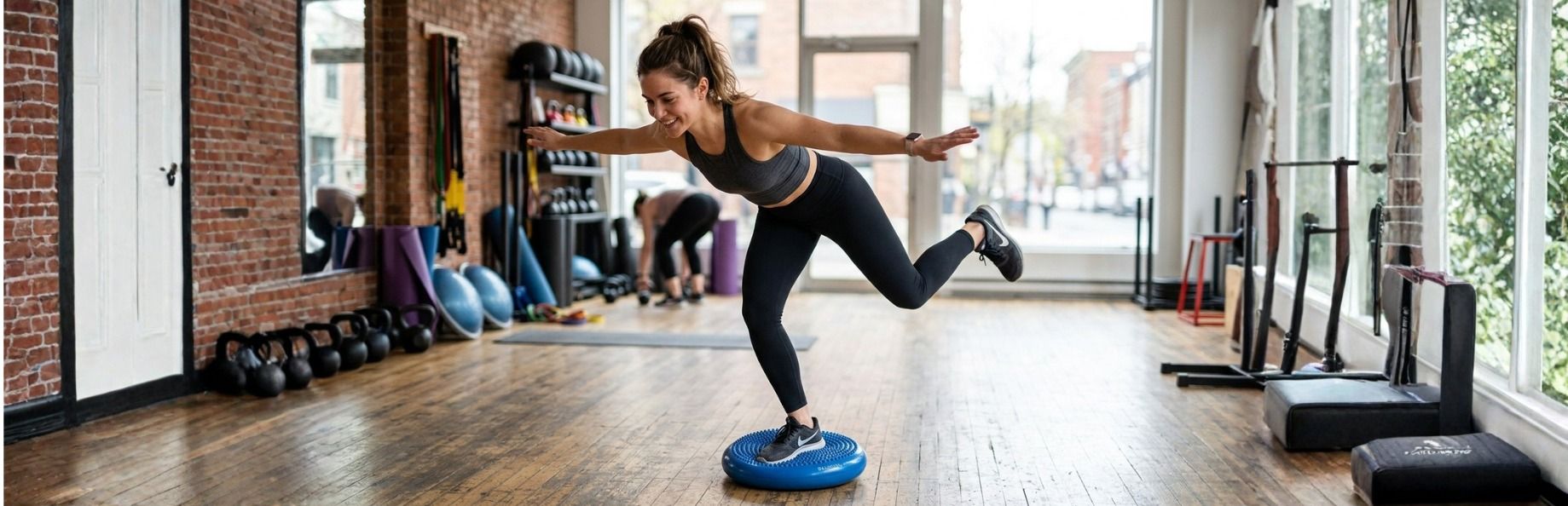
- Work on single-leg balance, whether on the ground, on an unstable surface, or even, for runners, on the toes
- Practice landing mechanics from a jump and changing direction
After a shoulder, elbow, or wrist injury:
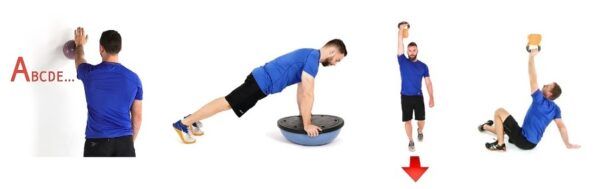
- Place your hands on an unstable surface and try, if the difficulty level is appropriate, to add movements
- Find exercises that require weight-bearing through the hands on the floor: inchworms, push-ups, etc.
- Other exercises: waiter’s walk, Turkish get-up, and many more
For the neck after a concussion or whiplash:
- With a laser on your head pointing to the center of a target on the wall in front of you, close your eyes, turn your head, then try to return to the center of the target while keeping your eyes closed
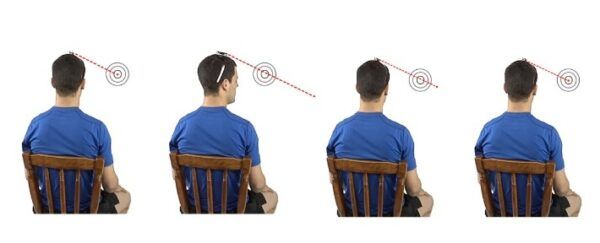
- With a laser on your head, try to complete a maze placed on the wall in front of you without the laser going outside the lines
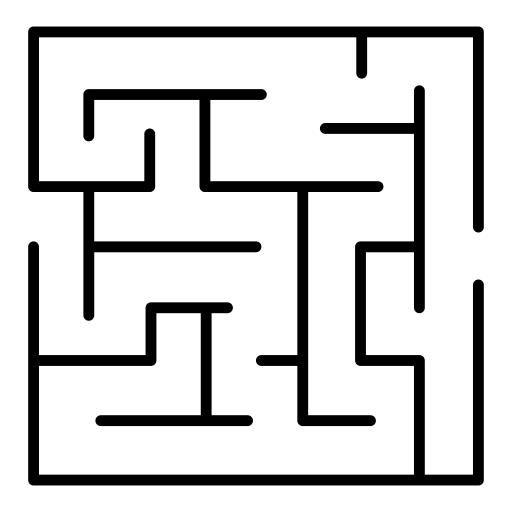
- Simple way to make a head-mounted laser: attach a small pocket laser to a headband or cap using elastic bands or tape
If in doubt, don’t hesitate to consult your physiotherapist to guide you toward the appropriate exercises for you.
Share article