Share article
The holiday season can be a stressful and highly anticipated time for people whose goal is to maintain or lose weight. Indeed, it’s a period when food and alcohol are plentiful, and it can sometimes be difficult to fully enjoy family gatherings with all that pressure!
Here are 6 tips to help make your holiday season easier and more enjoyable.
1.Listen to your hunger and fullness cues
Our bodies send physiological signals that, from birth, let us know when we’re hungry and when we’re full. These signals tell us when to start (hunger) or stop (fullness) eating. They’re essentially what guide us to determine how much energy we need each day to function well.
Listening to these signals is the key to surviving the abundance of food at family dinners. Being aware of your hunger helps you recognize when you’ve had enough to eat.
Here are some clues to help you determine whether you’re hungry or full:
Remember that you never have to finish your plate
Faced with an abundance of food, it’s often hard to choose because we want to taste everything. That’s perfectly fine! But listen to your fullness cues—this will help you leave the meal feeling energized rather than uncomfortable.
Eat slowly and savor your food
It can take up to 20 minutes for fullness signals to reach the brain, which is why eating slowly is so important for tuning into your hunger and fullness. To help you take your time, try using smaller plates and serve yourself again if needed.
2. Avoid arriving hungry
In anticipation of large meals, some people tend to skip meals to “save calories” and allow themselves to eat more later.
That’s not ideal!
The result of this strategy is that it becomes harder to listen to your hunger and fullness cues and to control yourself. We tend to eat more—beyond our hunger.
In the end, you may actually consume more calories than if you had eaten an extra meal earlier in the day. It’s therefore recommended to eat three meals a day and snacks if needed, to avoid showing up to a feast with an empty stomach.
3. Eat vegetables
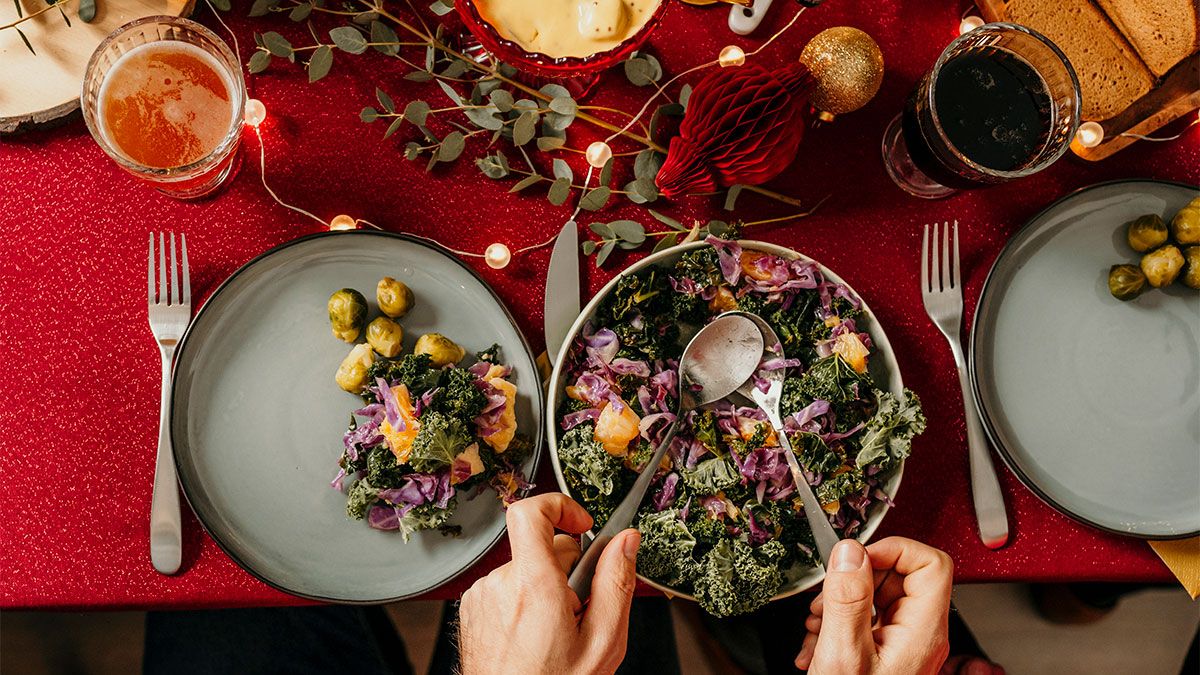
Vegetables are often overlooked during the holidays and replaced with high-energy foods like puff-pastry dishes or fried items.
However, vegetables are great sources of vitamins, minerals, and fiber. Since fiber helps you feel full, adding vegetables to your plate can help you eat fewer high-calorie foods!
Recommendations:
- Choose vegetable-based appetizers (e.g., raw veggies and hummus, salad, etc.)
- Fill half of your main plate with vegetables
4. Dessert isn’t forbidden
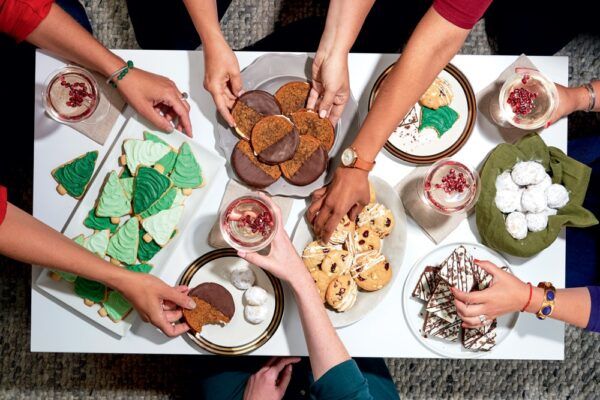
It’s perfectly fine to enjoy a slice of Yule log with your family!
The key is to listen to your hunger and fullness cues. This means serving yourself a smaller portion if you’re not very hungry—and remember, you don’t have to finish your dessert!
5. Drink water
The holiday season often comes with not only an abundance of food but also increased alcohol consumption. However, alcoholic drinks are high in calories. When having a glass of wine, for example, take your time and savor it—it makes the pleasure last longer! You might also consider alternating between an alcoholic drink and a glass of water. This will help you stay more alert during those board game nights!

6. Stay active
Staying active helps you maintain your energy and healthy habits during the holidays. If your schedule changes or you don’t have time for your usual workout, take advantage of family activities: ice skating, walking, skiing, sledding, or playing a game of pickup hockey!
Share article