
Share article
What Is Trigger Finger?
Trigger finger, also called stenosing tenosynovitis or trigger thumb, is a common condition that affects the flexor tendons of the fingers or thumb. It causes a painful catching, locking, or “clicking” sensation when moving the finger, often interfering with daily activities such as gripping, writing, or opening objects.
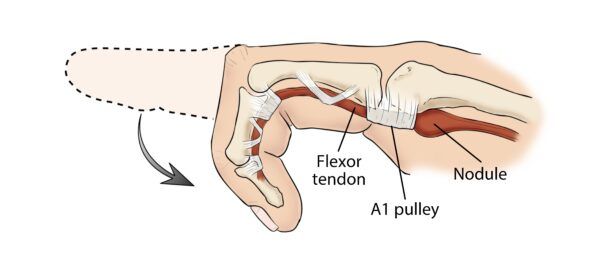
Each finger contains one or two flexor tendons that allow the joints to bend. These tendons glide through a narrow ligament tunnel made of pulleys that keep them close to the bone.
In trigger finger:
- The A1 pulley (located at the base of the finger in the palm) can thicken.
- An inflammatory nodule may form on the tendon sheath.
As a result, the tendon can no longer glide smoothly, leading to catching, locking, or the characteristic “triggering” sensation when moving from flexion to extension.
What Causes Trigger Finger?
Several factors can contribute to its development:
Mechanical factors
- Repetitive gripping or forceful hand movements.
- Manual work involving repeated finger flexion.
- Excessive friction between the flexor tendons and the A1 pulley.
Medical factors
Certain health conditions increase the risk:
- Diabetes.
- Hypothyroidism.
- Rheumatoid arthritis.
- Carpal tunnel syndrome.
Local trauma
A direct impact to the palm can trigger inflammation in the tendon.
Symptoms of Trigger Finger
Symptoms usually appear gradually and may include:
- A clicking or popping sensation when bending or straightening the finger.
- Pain or tenderness at the base of the affected finger (palm).
- Morning stiffness.
- Finger locking, sometimes requiring the other hand to straighten it.
- In advanced cases: the finger may become stuck in a bent position.
Without treatment, trigger finger can progress to decreased hand function and joint contractures.
Why Consult a Hand Therapist?
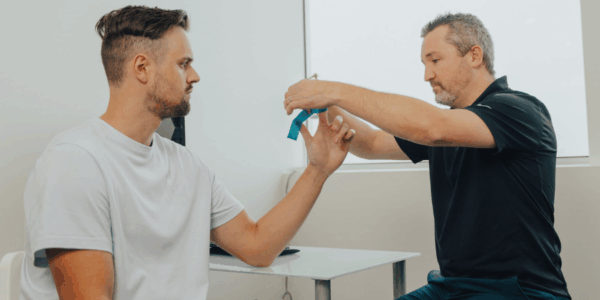
Hand therapy—provided by an occupational therapist with expertise in treating upper-extremity conditions—is an effective, accessible approach that does not require a medical referral.
A certified hand therapist can:
- Confirm the diagnosis and rule out other causes of finger pain.
- Provide targeted, non-invasive treatment.
- Determine whether a medical or surgical referral is appropriate.
- Optimize hand function and prevent the condition from worsening.
How Is Trigger Finger Treated?
Treatment varies depending on the severity, but conservative options are often very effective, especially when started early.
In Hand Therapy (Occupational Therapy)
- Strategies to reduce aggravating movements and ergonomic adjustments.
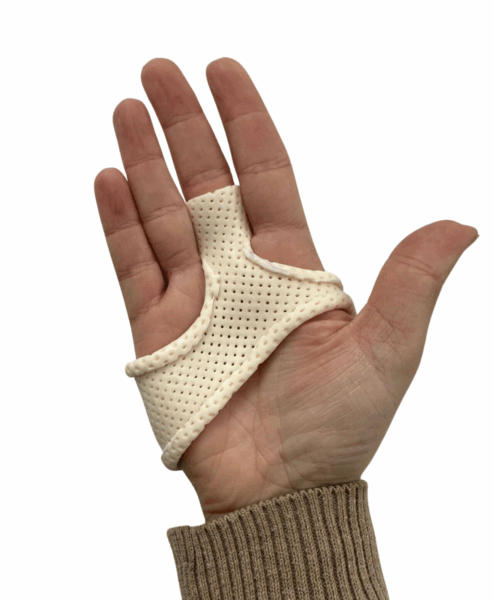
- Custom-made orthoses (often worn at night) to rest the tendon.
- Gentle exercises to maintain mobility and reduce stiffness.
- Manual techniques to decrease local inflammation.
✔️ Conservative treatment shows a success rate of 47% to 93%, which increases when combined with a corticosteroid injection, if appropriate.
If Symptoms Persist
A minor surgical procedure to release the A1 pulley may be recommended when:
- Conservative care is no longer effective.
- The finger remains locked.
- Pain significantly limits daily activities.
Preventing Recurrence: Our Recommendations
- Avoid prolonged repetitive gripping.
- Vary grips and reduce force during manual tasks.
- Take frequent breaks.
- Strengthen the hand as advised by your therapist.
- Monitor early signs such as stiffness or clicking.
When to Seek Help
If you notice pain, stiffness, clicking, or locking, it’s important to consult promptly. Early intervention leads to better outcomes, faster recovery, and reduces the need for surgery.
👉 Book an appointment with one of our certified hand therapists at Kinatex Sports Physio. We’ll help you restore comfort and mobility so you can return to your daily activities with confidence.
Share article