Share article
What is neck and shoulder blade pain during desk work?
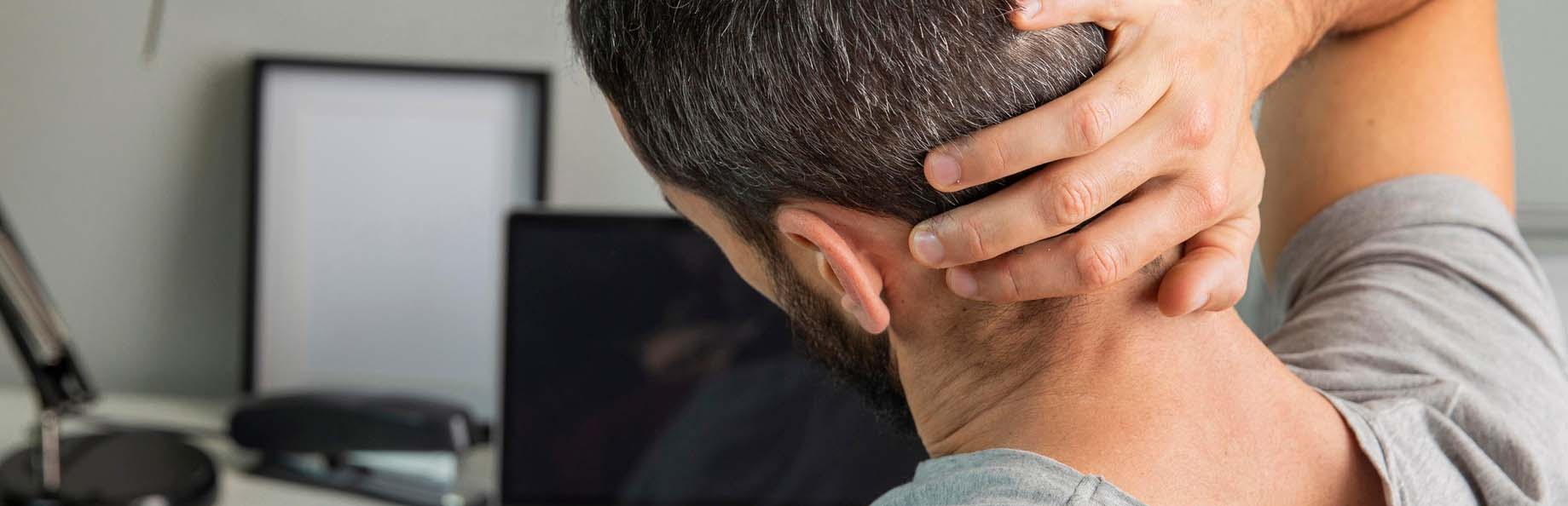
It’s a reality of our time: more and more people—especially with the rise of remote work—spend most of their day sitting at a desk. This new “trend,” while convenient for many of us (being able to work from home is a privilege in itself), can be problematic for some. Neck pain, stiffness between the shoulder blades, sciatic nerve pain, etc., are all examples of potential challenges that come with full-time desk work!
Here are 5 tips for office workers to help prevent pain:
Desk Ergonomics
It may seem simple, but spending 15–30 minutes optimizing your desk ergonomics can reduce mechanical strain on your body and decrease the risk of injuries.
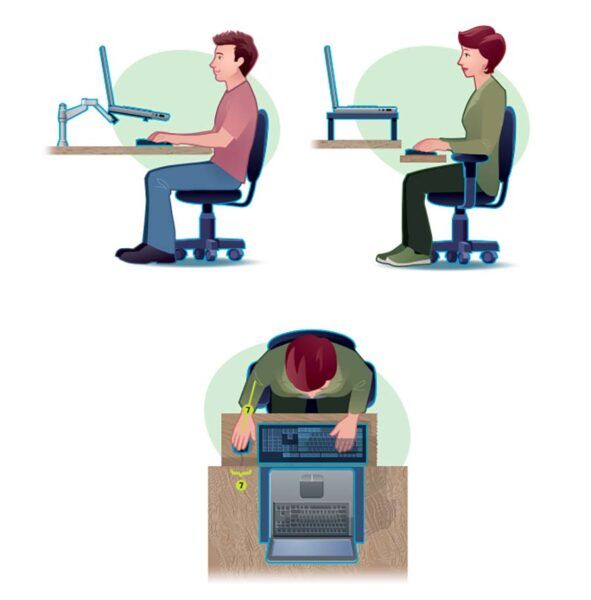
Briefly, here are some key things to check:
Seat height: Your thighs should be parallel to the floor, and your feet should touch the ground (use a footrest if needed).
Armrests: Should support your elbows at desk height, keeping shoulders in a natural position.
Keyboard and mouse: Should be at the same height and as close together as possible.
Screen height: Should be at eye level (no more than 10–15 cm below) and at least 50 cm from your face.
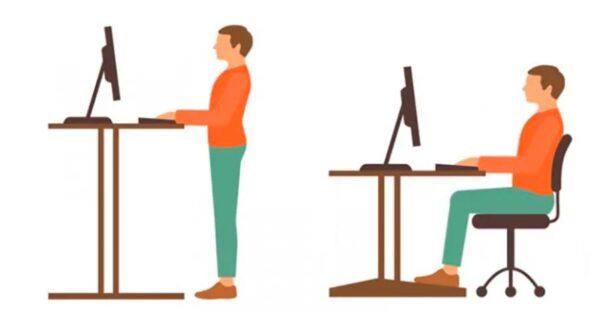
*Bonus: Consider a height-adjustable desk to occasionally work standing.
Change Positions Frequently
We often talk about good or bad posture at a desk, but more often than not, the best posture is the one you don’t stay in for long! Changing positions allows different structures to bear the load and “move the discomfort around.” Setting an alarm every 30 minutes to shift positions (straight back → rounded back, feet on floor → crossed legs, weight on right arm → weight on left arm) can be a simple way to apply this tip.
Take a Walk During Breaks
Following the same logic as above, taking breaks throughout the day helps prevent pain by varying your positions. Additionally, office workers are more productive when their day includes at least 30 minutes of exercise and/or short micro-breaks.
A 30-minute walk, for example during lunch, can split your workday in two. Try it—you might be surprised how much it makes the second half of your day feel easier!
Strengthen the Trapezius Muscles
The trapezius muscles (especially the upper fibers) function to lift the shoulders and extend the head and neck. This muscle is largely responsible for keeping the head upright in the typical forward-leaning desk position.
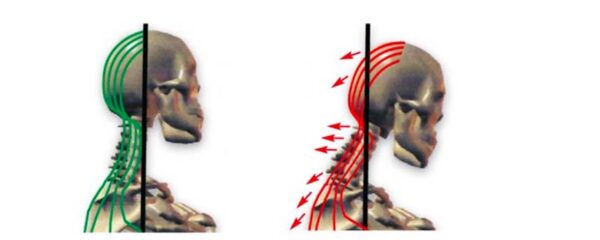
Over time, constant contraction can cause stiffness and pain at the base of the neck and above the shoulders—a way for the muscle to say it has “too much on its shoulders,” literally! Strengthening the upper trapezius can help it handle this continuous load better.
A simple exercise is dumbbell shoulder shrugs: 3 sets of 10 repetitions with a weight that doesn’t cause pain is a good starting point.

If Nothing Works? See a Physiotherapist.
Have you tried all these tips with no improvement? Do you have a history of car accidents or major physical trauma? Tingling or numbness down your arms to your fingers? Pain that persists or worsens over time? Shoulder shrugs cause pain? Want to work on posture to avoid a forward-head position? Don’t hesitate to see a physiotherapist!
Physiotherapists are the health professionals best equipped to guide you in managing injuries and resuming daily activities. Physiotherapy consultations are possible without a medical prescription, so when in doubt, consult a professional!
References
[:fr]https://www.cnesst.gouv.qc.ca/fr/prevention-securite/identifier-corriger-risques/liste-informations-prevention/ergonomie-travail-distance https://www.forbes.com/sites/alisongriswold/2012/06/12/to-work-better-just-get-up-from-your-desk/?sh=405450831c15 https://www.cnesst.gouv.qc.ca/fr/organisation/documentation/formulaires-publications/conseils-ergonomie-travail-ordinateur[:]
Share article