Share article
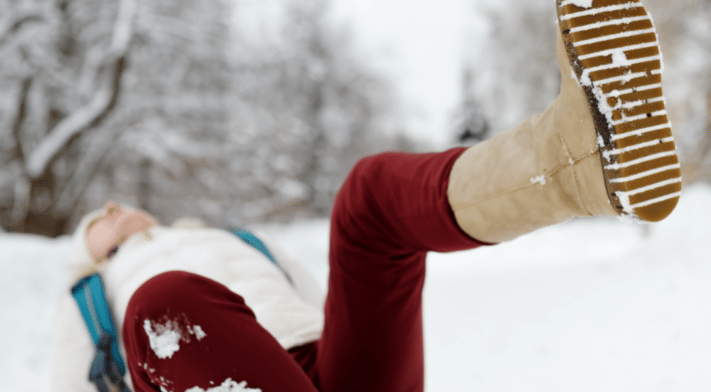
The month of November often coincides with the first snowfall of the season. Winter is an opportunity for many to indulge in winter activities such as downhill skiing, snowshoeing and cross-country skiing. For others, winter is a period when the risk of falling can cause anxiety and have many negative consequences. According to the Canadian Institute for Health Information (CIHI), there have been 152,500 hospitalizations due to falls last year. This risk begins to significantly increase for people who are in their early fifties. Therefore, we are taking advantage of this article to offer you some tips to reduce the risk of falls during the winter period!
Stay active
Indeed, staying active during the winter season will allow your body to maintain its tone and keep your muscles strong so that they are ready to react in the event of a fall. You could establish a weekly routine of strengthening, balancing, and stretching exercises to keep your body ready for anything. Many simple exercises can be done in the comfort of your own home, and most of the time equipment may not even be necessary to perform a basic exercise routine. You could also consult one of our therapists to establish or confirm an exercise plan adapted to your specific needs.
Dress adequately
Wear warm clothes. We know that a warm body reacts more quickly than a body that is cold. Therefore, when going outdoors in the winter, ensure that every part of your body is protected from the cold and that you are still able to move adequately. Also, wear appropriate footwear. It is recommended to use boots with wide and non-slip soles. In addition, you could always add cleated soles to your footwear. The metal cleats will help grip the frozen ground and ice better and will be able to provide you additional security when walking.

Plan with extra time
We are more at risk of injury when we are pressed for time. When we are hurried, we are more likely to pick up the pace and fail to assess our surroundings adequately. If snowfall has occurred, you are at a greater risk of falling. Therefore, you will need to plan extra time to assess your environment such as uneven surfaces or the presence of an icy surface under a blanket of snow. In these conditions, slow down. Widen the distance between your feet to improve your stability. Slightly bend your knees to lower your center of gravity and improve your balance. Take smaller and slower steps.
Avoid overloading your hands
Because of the bitter temperature, it can be very tempting to overload your arms and hands with objects to avoid being stuck in the cold. For example, when bringing in the grocery bags after shopping to avoid too many trips from the car to the door. While this practice may seem good at the time, the excessive and uneven loads in your hands put you at greater risk for falls. You could opt for a backpack to carry your shopping bags and thus keep your hands free in case of falls or simply to hold onto a railing. Otherwise, just decide to make more trips. These extra trips will make you exercise more and may well save you weeks of recovery in the event of a fall.

Better to be safe than sorry
Winter can be a dangerous time of the year and a riskier time for falls. However, prevention is the key to avoiding falls and to maintaining your level of independence. By following the tips above, you can avoid falling and enjoy a safe winter season. If you are a victim of a fall and sustain an injury, do not wait to consult one of our therapists who will be able to get you back on your feet quickly again!
Share article