Share article
Shockwave therapy in physiotherapy is an effective, non-invasive solution for chronic tendinopathies that persist despite initial treatment. Offered at Kinatex, this specialized service—also known as Shockwave—aims to restart the tendon’s natural healing process and help you return to your daily and sports activities pain-free.
What is a tendinopathy?
Tendon pain, commonly referred to as tendinitis, tendinosis, or tendinopathy, can become very limiting.
In the acute phase, appropriate management (relative rest, load management, targeted exercises) is recommended. However, when the pain persists, the tendon can undergo structural and metabolic changes that reduce its ability to fully recover. Traditional physiotherapy remains the first line of treatment for this type of pain. However, some individuals do not respond to conventional treatment and continue to experience limitations in their activities.
It is in these cases that shockwave therapy becomes a preferred therapeutic option.
How does shockwave therapy work?
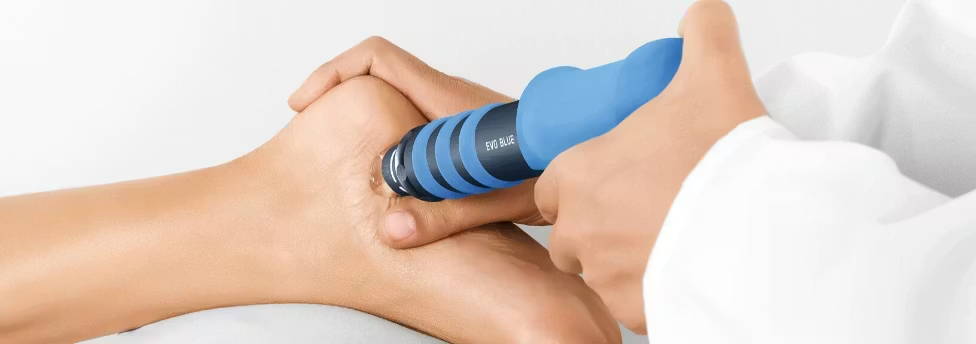
Radial shockwave therapy uses high-energy mechanical waves transmitted into the tissues using a metal applicator.
Concretely:
- A projectile is accelerated within a tube.
- It strikes a metal applicator.
- The mechanical wave generated is transmitted to the tendon.
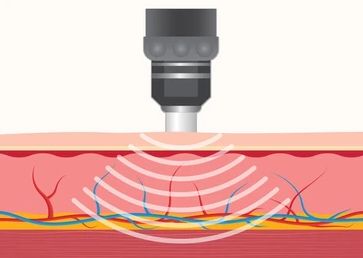
This stimulation creates controlled microtrauma, triggering a beneficial local inflammatory response
The therapeutic goals are as follows:
- Stimulate tissue regeneration
- Promote cellular cleanup
- Improve blood circulation
- Restart the tendon’s healing capacity
This then helps optimize active rehabilitation in physiotherapy.
Treatment process
The first visit: a complete assessment
Your physiotherapist will perform:
- A detailed evaluation of your condition
- Analysis of the tendon’s capacity
- Identification of contributing factors (biomechanics, training loads, posture, etc.)
Shockwave therapy begins during this first visit.
Subsequent sessions (2 to 3 visits)
We generally plan 3 to 4 treatments to activate the recovery process.
Each session includes:
- Application of shockwaves
- Corrective work on contributing factors
- Adjustment of your rehabilitation plan

A personalized exercise program
At the end of the treatment series, a specific exercise program will be prescribed to:
- Gradually strengthen the tendon
- Improve its tolerance to load
- Prevent recurrence
Follow-ups at 4 and 12 weeks after the final shockwave session are recommended to optimize long-term results.
What conditions are commonly treated with shockwave therapy?
Shockwave therapy is particularly recognized as effective for the following conditions:
- Plantar fasciitis / heel spur
- Achilles tendinopathy
- Patellar tendinopathy (jumper’s knee)
- Proximal hamstring tendinopathy
- Trochanteric tendinobursopathy / gluteal tendinopathy
- Rotator cuff tendinopathy (especially with calcifications)
- Lateral epicondylitis (tennis elbow)
- Medial epicondylitis (golfer’s elbow)
Benefits of shockwave therapy
Shockwave therapy offers several important advantages:
- Non-invasive treatment, with no surgery or injections
- Few long-term side effects
- May help avoid more invasive treatments such as injections or surgery
- Physiotherapy service covered by most private insurance plans
- Proven effectiveness for chronic tendinopathies and calcifications
Possible drawbacks (normal reactions to the therapeutic process)
Shockwave therapy may cause some temporary effects:
- Discomfort during application
- Temporary local sensitivity
- Temporary increase in pain for a few days
- Gradual (not immediate) results
These reactions are generally short-lived and are part of the tissue healing process.
What are the expected results?
The benefits of shockwave therapy appear gradually. Improvement is often noticeable about 4 weeks after the end of treatment, with optimal results typically achieved between 3 and 6 months. It is important to note that lower limb conditions (foot, ankle, knee, hip) tend to respond better than upper limb conditions.

Recommendations to optimize your results
Before treatment
- Avoid anti-inflammatory medications (e.g., ibuprofen, naproxen) for 2 weeks prior
- Maintain normal activities without overloading the tendon
- Inform your physiotherapist of any health changes
- Plan a period when you can adjust your activity level (e.g., off-season for sports)
After treatment
- Avoid anti-inflammatory medications during treatment and for 4 weeks afterward
- Increased sensitivity for 24 to 72 hours is normal
- Avoid, if possible, ice and heat
- Limit high-impact activities for 24 to 48 hours
- Gradually resume activities as recommended
- Strictly follow your exercise program
Why choose shockwave therapy at Kinatex?
At Kinatex, our physiotherapists use an evidence-based approach combining:
- Comprehensive biomechanical assessment
- Shockwave therapy
- Personalized active rehabilitation
- Structured follow-up in the medium and long term
Our goal: to help you return to your activities with a stronger, more resilient, and sustainably functional tendon.
If you are suffering from a chronic tendinopathy and traditional treatments are no longer sufficient, shockwave therapy may be the solution to restart your healing process. Call us to schedule your first appointment.
Share article